 Her Wellness NurseWomen's health & wellness, Charlotte NC
I'm Lisa Rubino, a registered nurse.
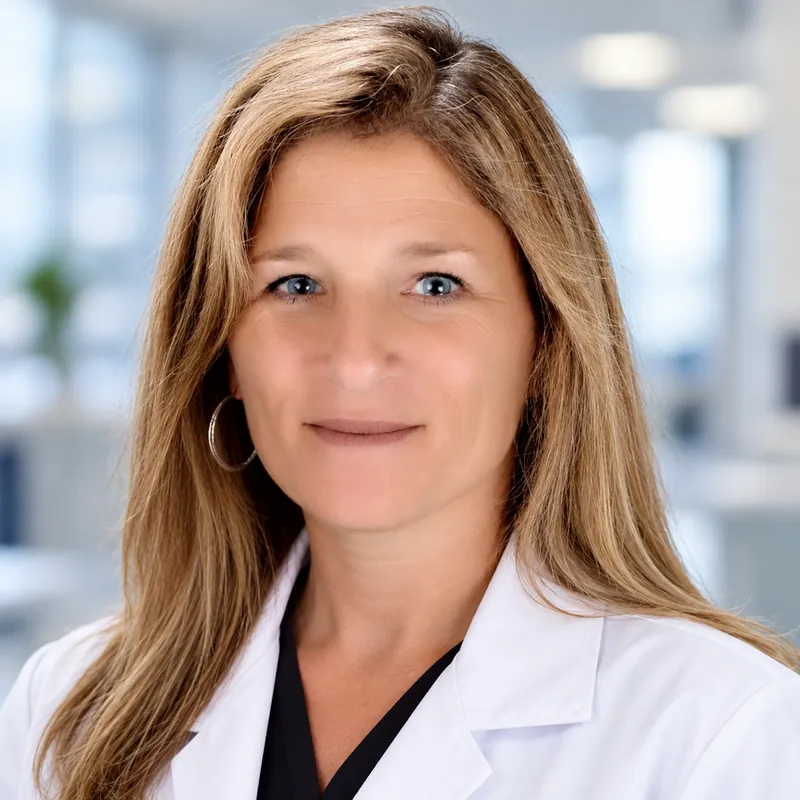
I have been a nurse since 1993. For most of that time I worked in people's homes, which taught me how health advice meets real life.
I started on the hospital floor in Franklin Square, New York. I moved into home health on Long Island and spent nine years there before relocating to Charlotte, where I kept caring for patients at home, worked as a wound care nurse, and then took on leadership roles: I helped open a new branch that grew from nothing to a census of 220, and later directed a branch with a census of 588 and about 40 clinicians.
In 2026 I completed nurse coach training so I could do the part I enjoy most: helping women understand their health and follow through on it.
- Hospital nurse, then home health nurse, Long Island, New York
- Home health nurse, Charlotte, North Carolina
- Wound care nurse
- Clinical manager, then director of healthcare services, home health, Charlotte
- Clinical nurse in a medical practice
- Registered nurse, North Carolina (active, multistate, no discipline). Verify
- Bachelor of Science, Molloy College, cum laude
- Certificate, Transformative Nurse Coach program, The Nurse Coach Collective
- Wound Treatment Associate program, Wound, Ostomy and Continence Nurses Society (24 contact hours)
- Basic Life Support provider, American Heart Association
Nurse coaching is a recognized nursing specialty. The training I completed is designed for registered nurses and builds on clinical experience; it is not a course clients take.
Transformative Nurse Coach Certificate, The Nurse Coach Collective (April 2026)
- A six-month program with 120 contact hours of nursing continuing education, approved by the American Holistic Nurses Association.
- A 60-hour practicum: 50 hours coaching 10 clients one-on-one, plus 10 hours of live supervised calls.
- Fifteen weeks of study: the nurse coaching process; co-creative skills; goals, action, insight and accountability; lifestyle medicine and nutrition; connection and mindfulness; movement and rest.
Wound Treatment Associate program, Wound, Ostomy and Continence Nurses Society (2017)
- 24 contact hours covering risk assessment, pressure-injury prevention, skin care, wound documentation, compression wraps, ankle-brachial index measurement and negative-pressure wound therapy.
What that means for you
- I was trained to help you set goals you choose, not goals handed to you, and to keep you accountable to them.
- The curriculum covers sleep, movement, nutrition and stress, which is where most of the day-to-day work of menopause and midlife health happens.
- Thirty years of clinical nursing sit underneath it: I know when something is outside coaching and belongs with your doctor or nurse practitioner.
What I do and do not do. I coach and teach within the limits of my nursing license. I do not diagnose, prescribe, change medications, or provide emergency care.